ROCKWOOL Insulation Calculator
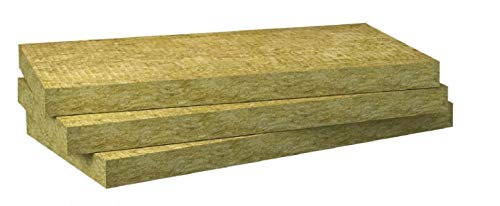
ROCKWOOL Comfortbatt is a stone wool (mineral wool) batt sized to friction-fit between studs and joists. Enter the area, the framing and the R-value you want; the calculator gives the batt thickness from ROCKWOOL's data sheet, the R-value per inch, how many batts to buy and — for the common 16 in wood-stud sizes — how many bags.
Your project
Wood and steel stud batts come in different R-values; an R-value not made for your framing falls back to the first in its range.
Your results
- Batts
- 85
- R-23, 5.5 in thick, 4.98 sq ft each
- Bags
- 11 (8 batts, 39.8 sq ft per bag)
- R-value per inch
- R-4.18
- Fits
- 2×6 wall (5.5 in)
Estimates use typical US material and labor pricing. Confirm quantities against the coverage chart on the bag before you buy.
Gear for this job
Mineral Wool Insulation Batts

Rockwool 8# Density Foil-Faced Stone Wool Insulation Mineral Wool Panels, Batts - 2" Thick, 2'x4' (7) per Pack, Pro-Grade Acoustic Soundproofing, Thermal Barrier & Fire Block
$259.70
Check price on Amazon
ProRox SL 960 Rockwool, Roxul, Mineral Wool Insulation Board High Temperature 8# Density 4"
$227.90
Check price on Amazon

1 1/2 in x 48 in x 24 in Mineral Wool High Temperature Insulation, 8#, Mfr: 40325-A
$46.00
Check price on Amazon
As an Amazon Associate I earn from qualifying purchases. Product links on this page may earn us a commission at no extra cost to you.
Prices as of Oct 1, 2026, 4:38 AM UTC. Product prices and availability are accurate as of the date/time indicated and are subject to change. Any price and availability information displayed on Amazon.com at the time of purchase will apply to the purchase of this product.
How this calculator works
- Batt area = batt width × length ÷ 144 (15.25 × 47 in = 4.98 sq ft)
- Batts = ceil(area × (1 + waste) ÷ batt area)
- Bags = ceil(batts ÷ batts per bag); R per inch = R-value ÷ thickness
ROCKWOOL Comfortbatt R-values and thickness
| Framing | R-value | Thickness | R per inch |
|---|---|---|---|
| Wood stud | R-13 | 3.5 in | R-3.71 |
| Wood stud | R-15 | 3.5 in | R-4.29 |
| Wood stud | R-21 | 5.5 in | R-3.82 |
| Wood stud | R-23 | 5.5 in | R-4.18 |
| Wood stud | R-30 | 7.25 in | R-4.14 |
| Wood stud | R-38 | 9.5 in | R-4 |
| Steel stud | R-10 | 2.5 in | R-4 |
| Steel stud | R-15 | 3.5 in | R-4.29 |
| Steel stud | R-24 | 6 in | R-4 |
| Steel stud | R-30 | 7.25 in | R-4.14 |
| Steel stud | R-32 | 8 in | R-4 |
ROCKWOOL Comfortbatt technical data sheet (USA), thermal resistance per ASTM C518.
Bags for common wall areas (wood 16 in o.c., 5% waste)
| Wall area | R-15 (12/bag) | R-23 (8/bag) | R-30 (6/bag) |
|---|---|---|---|
| 100 sq ft | 2 bags | 3 bags | 4 bags |
| 200 sq ft | 4 bags | 6 bags | 8 bags |
| 400 sq ft | 8 bags | 11 bags | 15 bags |
| 800 sq ft | 15 bags | 22 bags | 29 bags |
| 1200 sq ft | 22 bags | 32 bags | 43 bags |
Bag counts as packed for retail (e.g. R-23 RXCB551525: 8 batts, 39.8 sq ft). Pack sizes can change — check the label.
Rockwool vs fiberglass R-value
Stone wool is denser than standard fiberglass batts, so it reaches a higher R-value in the same cavity: R-15 in a 3.5 in 2×4 wall against R-13 for a standard fiberglass batt, and R-23 in a 5.5 in 2×6 wall. ROCKWOOL's data sheet also lists it as noncombustible (ASTM E136), moisture-resistant and good at absorbing sound.
Comfortbatt is cut slightly wider than the stud bay (15.25 in for 16 in wood framing) with one flexible edge, so it friction-fits without staples. Cut it with a serrated knife and do not compress it — a squeezed batt loses R-value.
Frequently asked questions
What is the R-value of Rockwool insulation?
Comfortbatt for wood studs is R-13 or R-15 at 3.5 in, R-21 or R-23 at 5.5 in, R-30 at 7.25 in and R-38 at 9.5 in — about R-4.2 per inch. Steel-stud batts are R-10, 15, 24, 30 and 32.
How many square feet are in a bag of Rockwool?
It depends on the R-value: a bag of R-15 Comfortbatt for 16 in wood studs holds 12 batts (59.7 sq ft), R-23 holds 8 (39.8 sq ft) and R-30 holds 6 (29.9 sq ft).
How much Rockwool do I need for a 2×6 wall?
Use R-23 Comfortbatt (5.5 in). A 400 sq ft wall at 16 in o.c. with 5% waste needs 85 batts — 11 bags of 8.
Is Rockwool better than fiberglass?
It gives more R per inch than standard fiberglass batts, doesn't burn, holds its shape and absorbs sound well. It usually costs more per square foot. Both work when installed without gaps or compression.
Can Rockwool go in an attic?
Yes, between joists or rafters — ROCKWOOL lists R-30 and R-38 Comfortbatt for attics and cathedral ceilings. For an open attic floor, blown insulation is usually cheaper per R.
Related calculators
Free app
Run this calculator on your phone
Offline-ready, saves your results, no signup.
Batts
85