Wall Insulation Calculator
Stud walls are sold by the bay, not the square foot. Enter your wall run, height and stud spacing and this returns the bay count, batt count and net coverage after openings.
Your project
Covers cuts, compression and odd bays. 10% is the usual default.
Your results
- Net wall area
- 304 sq ft
- Stud bays
- 36 bays
- 16 in on center
- Coverage to buy
- 334 sq ft
- 8 ft batts required
- 35 pieces
- R-value at 3.5 in cavity
- R-11.2
- Estimated material cost
- $152
Estimates use typical US material and labor pricing. Confirm quantities against the coverage chart on the bag before you buy.
Save this calculation in the free app
Smart Insulation Calculator keeps your insulation jobs on your phone, offline. On iPhone? It's inside Roofing Calculator & Estimator.
Gear for this job
Fiberglass Batt Insulation R19

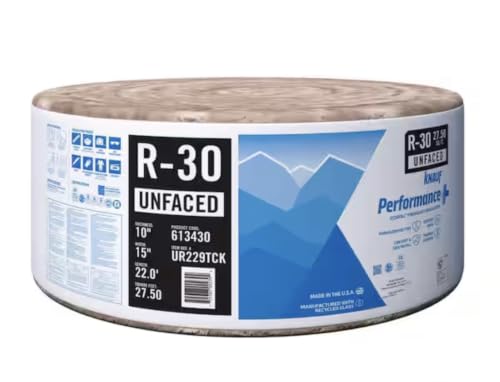

Mineral Wool Insulation Batts

Rockwool 8# Density Foil-Faced Stone Wool Insulation Mineral Wool Panels, Batts - 2" Thick, 2'x4' (7) per Pack, Pro-Grade Acoustic Soundproofing, Thermal Barrier & Fire Block
$259.70
Check price on Amazon
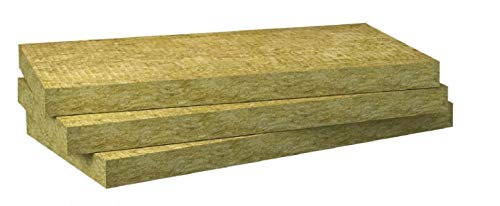
ProRox SL 960 Rockwool, Roxul, Mineral Wool Insulation Board High Temperature 8# Density 4"
$227.90
Check price on Amazon

1 1/2 in x 48 in x 24 in Mineral Wool High Temperature Insulation, 8#, Mfr: 40325-A
$46.00
Check price on Amazon
Staple Gun Insulation

Arrow 508 Heavy Duty T50 1/2-Inch Leg Length, 3/8-Inch Crown, Staples for Upholstery, Construction, Furniture, Crafts, 1250 Count(Pack of 1)
$3.97
Check price on Amazon

Upholstery Staple Gun Heavy Duty, YEAHOME 4-in-1 Stapler Gun with 4000 Staples, Manual Brad Nailer Power Adjustment Stapler Gun for Wood, Crafts, Carpentry, Decoration DIY
$16.99
Check price on Amazon

meite T50 Staples, 3/8 Inch Staples for Staple Gun, Heavy Duty Galvanized Staples, 20 Gauge 3/8" Crown, Compatible with T50 Staple Gun, Ideal for Upholstery, Construction, Furniture (1,512 Counts)
$6.98
Check price on Amazon
As an Amazon Associate I earn from qualifying purchases. Product links on this page may earn us a commission at no extra cost to you.
Prices as of Oct 11, 2026, 4:41 AM UTC. Product prices and availability are accurate as of the date/time indicated and are subject to change. Any price and availability information displayed on Amazon.com at the time of purchase will apply to the purchase of this product.
How this calculator works
- Net wall area = (length × height) − openings
- Stud bays = (length in inches) ÷ stud spacing, rounded up
- Batts = coverage to buy ÷ area of one batt
Keep going
- Buying batts? batt insulation bag calculator
- Step by step: how to install batt insulation
- What the finished wall achieves: wall assembly R-value calculator
- R-15 or R-23 mineral wool: ROCKWOOL insulation calculator
- Standard 2×4 batts: R-13 insulation calculator
- R-19 in a 2×6 wall: R-19 insulation calculator
- What the walls, attic and crawlspace cost together: whole-house insulation cost calculator
- Buying rolls rather than batts? roll insulation calculator
Frequently asked questions
What R-value fits in a 2x4 wall?
A 3.5-inch cavity takes R-13 standard or R-15 high-density fiberglass, or about R-15 mineral wool. A 2x6 wall (5.5 inches) takes R-19 to R-21.
Should wall batts be faced or unfaced?
In cold climates use kraft-faced batts with the paper toward the heated side. In hot-humid climates unfaced batts plus a separate air barrier is usually the better call.
Can you insulate walls without removing the drywall?
Yes — dense-pack cellulose or injected foam goes in through holes drilled between the studs, either from inside or through the exterior cladding. The holes get plugged and patched afterwards. It is the standard retrofit for a finished house, and the main limitation is that you cannot see what is in the cavity or fix what you find.
How much insulation fits in a 2x4 versus a 2x6 wall?
A 2x4 stud bay is 3.5 inches deep and a 2x6 is 5.5 inches, so the 2x6 holds about 57 percent more. With a material at R-3.7 per inch that is roughly R-13 against R-20, which is exactly why code in colder zones effectively pushes new construction toward 2x6 exterior walls.
What about the studs themselves?
Wood studs conduct heat far better than the insulation beside them, so they act as thermal bridges through the wall. In a typical framed wall the studs are 20 to 25 percent of the surface area, which pulls the whole-wall R-value well below the batt rating. Continuous exterior foam is the standard fix because it covers the studs rather than sitting between them.
Related calculators
Free app
Run this calculator on your phone
Offline-ready, saves your results, no signup.
Net wall area
304 sq ft