Vapor Barrier Calculator
Ver en españolVapor barrier needed = floor area + wall run-up, plus 15% for the 12 in laps at every seam: a 40 × 28 ft crawl space with 1 ft of run-up takes about 1,444 sq ft of sheeting, roughly $230 in 6 mil poly and seam tape. Enter your space for sheeting, roll runs, tape and cost at 6, 10 or 20 mil.
Your project
Your results
- Sheeting required
- 1,444 sq ft
- Includes 15% for laps and trim
- Strips across the space
- 3 runs
- 12 ft roll, 12 in overlap
- Linear feet of roll
- 120 ft
- Seam tape needed
- 132 ft
- Wall run-up area
- 136 sq ft
- Material cost
- $232
Estimates use typical US material and labor pricing. Confirm quantities against the coverage chart on the bag before you buy.
Save this calculation in the free app
Smart Insulation Calculator keeps your insulation jobs on your phone, offline. On iPhone? It's inside Roofing Calculator & Estimator.
Gear for this job
Vapor Barrier Plastic Sheeting

3 Rolls Vapor Barrier Tape,4" x 180 ft,Waterproof Seam Tape for Insulation
$41.99
Check price on Amazon

Blue Summit Supplies Vapor Barrier Tape, 3.78” x 180’ Roll, 9mm, Waterproof
$22.79
Check price on Amazon

ALORAIR 10 mil Crawl Space Vapor Barrier 10' x 100' Plastic Sheeting
$129.99
Check price on Amazon
House Wrap Insulation Tape

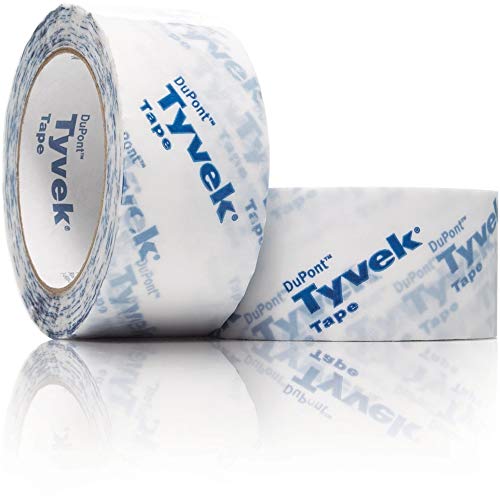

Foil Tape Hvac Insulation

Aluminum Foil Duct Tape Heavy Duty Waterproof, Premium Silver Metal HVAC Heat Tapes (2"*65Feet,3.9mil), High Temperature, Dryer Vent Insulation Tape for Ductwork, Ducting, Sealing, Patching, Furnace
$6.99
Check price on Amazon

Romeda Aluminum Foil Tape, 2 inch x 65 Feet Foil Tape (3.9 mil), Silver Insulation Adhesive Metal Tape, High Temperature Heavy Duty HVAC Tapes for Ductwork, Dryer Vent, HVAC
$6.29
Check price on Amazon

BOMEI PACK Aluminum Foil Tape,Heavy Duty Metal Foil Tape,High Temperature Silver Duct Tape,Perfect for Sealing & Patching,HVAC,Air Ducts,Insulation and Metal Repair (3 Inch)
$15.88
Check price on Amazon
As an Amazon Associate I earn from qualifying purchases. Product links on this page may earn us a commission at no extra cost to you.
Prices as of Oct 11, 2026, 4:41 AM UTC. Product prices and availability are accurate as of the date/time indicated and are subject to change. Any price and availability information displayed on Amazon.com at the time of purchase will apply to the purchase of this product.
How this calculator works
- Base area = (length × width) + wall run-up area
- Total sheeting = base area × 1.15 for laps and trim
- Runs = width ÷ (roll width − 1 ft overlap)
Keep going
- Will it condense? dew point calculator
- Drying out the space first: dehumidifier size calculator
Frequently asked questions
How thick should a crawlspace vapor barrier be?
6 mil meets code for a vented crawlspace. For full encapsulation or if anyone will crawl on it, use 10 to 20 mil reinforced.
Which side does a vapor barrier go on?
Toward the warm side in winter — the interior in cold climates. In hot-humid climates skip the interior barrier entirely; it traps moisture on the wrong side.
How much vapor barrier do I need for a crawl space?
Floor area, plus the wall run-up, plus about 15% for overlaps and trimming. A 30 × 40 ft crawl space with 2 ft of wall run-up is 1,200 + 280 = 1,480 sq ft, or about 1,700 sq ft of 6 mil sheeting to buy, with 12 in overlaps taped at every seam.
Which side does a vapour barrier go on?
The warm-in-winter side, in heating-dominated climates — which means toward the interior. In hot humid cooling-dominated climates the moisture drive is inward, so an interior barrier is the wrong side and can trap moisture in the wall. This is one of the few building details where the right answer genuinely reverses with climate.
Do I need a vapour barrier at all?
Many modern assemblies deliberately use a vapour retarder rather than a barrier, so the wall can dry in at least one direction. A true barrier on both sides is the failure case: any moisture that gets in cannot leave. The question worth asking is not whether to block vapour but which way the assembly is able to dry.
Is a vapour barrier the same as an air barrier?
No, and conflating them is common. A vapour barrier resists diffusion through materials; an air barrier stops bulk air movement through gaps. Far more moisture moves through a wall carried by moving air than by diffusion, which means the air barrier usually matters more — and a vapour barrier full of staple holes and tears is not doing that job.
How much does a vapor barrier cost?
About $0.14 per sq ft for 6 mil polyethylene, $0.30 for 10 mil and $0.55 for 20 mil reinforced encapsulation liner, plus seam tape at about $0.25 per foot. A 40 × 28 ft crawl space with 1 ft of wall run-up needs about 1,444 sq ft of sheeting including laps: roughly $230 in 6 mil or about $825 in 20 mil, material only.
Related calculators
Free app
Run this calculator on your phone
Offline-ready, saves your results, no signup.
Sheeting required
1,444 sq ft