Comparisons
Fiberglass vs Cellulose Insulation
For an open attic floor these are the two realistic choices. They cost about the same installed, and the differences that matter are density, air resistance and how they behave when they get wet.
Updated October 2026 · about 7 min read
R-value and depth
Cellulose delivers about R-3.6 per inch; blown fiberglass about R-2.5. To reach R-49 you need roughly 14 inches of cellulose or 19 inches of fiberglass — a real consideration in a shallow attic or where you want to keep storage space.
Air movement and cold performance
Dense cellulose (about 1.5 lb/ft³ blown loose) resists airflow far better than light fiberglass. In very cold weather low-density fiberglass allows convective looping, which can cut its real-world performance noticeably. Cellulose holds its rating better in the deep cold.
Cost
Material is close: at retail, roughly $1.10–$1.60 per square foot at R-49 for cellulose (a 19 lb bag covers about 12 sq ft) and $0.90–$1.20 for AttiCat-style fiberglass. Installed prices run $1.60–$2.80 per square foot for either. Fiberglass usually wins slightly on retail material cost and bag count; cellulose on air resistance and depth.
Gear for this job

Owens Corning R-19 Unfaced Fiberglass Insulation 77.5 Sq.ft (15 in x 93 in) 1 Batt
$69.99
Check price on Amazon
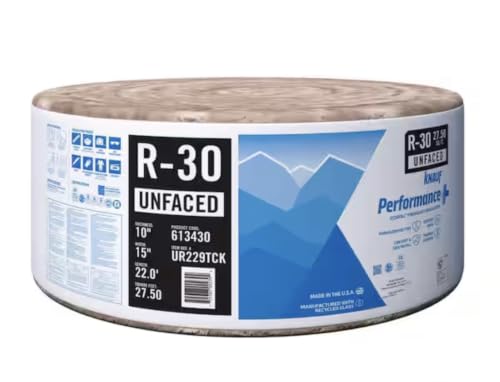
R-30 Unfaced Fiberglass Insulation Roll, 27.5 sq ft
$79.98
Check price on Amazon

R-13 Kraft Faced Fiberglass Insulation Roll, 40 sq ft
$49.97
Check price on Amazon

Certainteed 469 SQFT 8 Bags of R 30 Unfaced 16 by 48 Fiberglass Fits 2X10 Floor-Ceiling, attic
$722.07
Check price on Amazon
As an Amazon Associate I earn from qualifying purchases. Product links on this page may earn us a commission at no extra cost to you.
Prices as of Oct 11, 2026, 4:41 AM UTC. Product prices and availability are accurate as of the date/time indicated and are subject to change. Any price and availability information displayed on Amazon.com at the time of purchase will apply to the purchase of this product.
As an Amazon Associate I earn from qualifying purchases. Product links on this page may earn us a commission at no extra cost to you.
Moisture, settling and pests
Cellulose absorbs and releases moisture; if it gets soaked it mats and must be replaced. Fiberglass sheds water and dries out. Cellulose settles 10–20% (labels account for this); fiberglass barely settles.
Both are treated against pests and fire — cellulose with borates, which also deter insects and mice, fiberglass because it is inorganic and non-food.
Which to choose
Cold climate, deep-enough attic, want the best air resistance for the money: cellulose. Shallow attic, humid or leak-prone roof, or you want the lightest load on the ceiling: fiberglass. Either one is only as good as the air sealing underneath it.
Run the numbers
Frequently asked questions
- Is cellulose better than fiberglass?
- For attic floors in cold climates, generally yes — more R per inch and better resistance to air movement. Fiberglass is better where moisture or weight is a concern.
- Can you mix cellulose over fiberglass?
- Yes. Blowing cellulose on top of existing fiberglass is common and works well, as long as the old layer is dry and clean.
- Which is cheaper?
- They are close. At retail bag prices blown fiberglass is often slightly cheaper per R-value; cellulose needs a few inches less depth. Installed quotes overlap.
Insulation gear worth owning
The tools and materials that show up on almost every insulation job.

Aimee’s Workshop Attic Anchor - Insulation Ruler Depth Markers for Blown-in Insulation 30 Pack, 24 Inch Heavy Cardstock
$29.98
Check price on Amazon
Owens Corning R-19 Unfaced Fiberglass Insulation 77.5 Sq.ft (15 in x 93 in) 1 Batt
$69.99
Check price on Amazon

Pangda 10 Pack Insulation Removal Vacuum Bags Heavy Duty 75 Cu ft,Black
$95.99
Check price on Amazon

3M Particulate Disposable Respirator 8210, N95, Pack of 20, NIOSH APPROVED
$22.89
Check price on Amazon
As an Amazon Associate I earn from qualifying purchases. Product links on this page may earn us a commission at no extra cost to you.
Prices as of Oct 11, 2026, 4:41 AM UTC. Product prices and availability are accurate as of the date/time indicated and are subject to change. Any price and availability information displayed on Amazon.com at the time of purchase will apply to the purchase of this product.