Shed Insulation Calculator
Sheds are the building most often insulated badly, because the framing was never designed to hold insulation. Enter your shed size and this gives you the three surfaces separately — walls, roof and floor — plus what will actually fit in the depth you have.
Your project
A pitched roof has more surface than its footprint. This scales it.
Single-skin and metal sheds have nowhere to put batts — you are adding depth, not filling it.
A 2x4 stud bay is 3.5 in. On a single-skin shed this is whatever you furr out.
Covers cuts, compression and odd bays. 10% is the usual default.
Your results
- Wall area to insulate
- 245 sq ft
- Roof area
- 101 sq ft
- Footprint 96 sq ft x pitch factor
- Floor area (if insulating)
- 96 sq ft
- Order with waste
- 381 sq ft
- Walls plus roof; add the floor if you are doing it
- R-value at this depth
- R-17.5
- Zone target for walls
- R-20
- Short by R-2.5 — you need more depth or a higher R per inch
- Material estimate
- $560
- Material only; sheds are almost always DIY
- Construction note
- Batts or board both work in the cavity
Estimates use typical US material and labor pricing. Confirm quantities against the coverage chart on the bag before you buy.
Gear for this job
Rigid Foam Board Insulation

Pangda 6 Pack Foam Board Insulation Waterproof Shower Wall Panels 48" x 32" x 1/2" Rigid Xps Foam Insulation Board with Fiberglass Mesh for Tile Backer Bathroom Wall & Floor
$209.99
Check price on Amazon

Ardex TLT 119 Waterproof Cementitious XPS Foam Board 32"x48"x1/2", 5pc
$166.46
Check price on Amazon
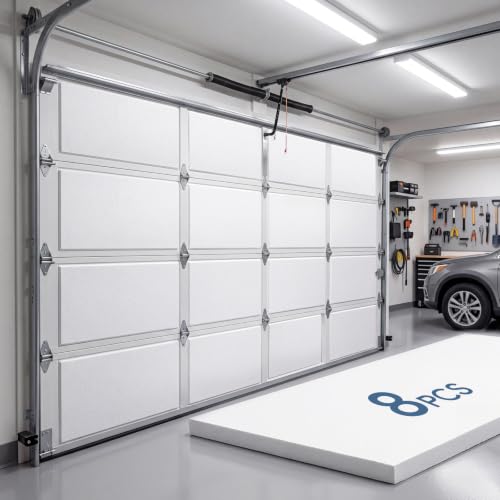
8 Pack 1-1/4"x20"x54" EPS Foam Garage Door Insulation Panels
$119.99
Check price on Amazon
Insulation Knife Cutter

maudibozz Insulation Knife - Sod Cutter Knife: stainless steel 11.14-Inch sharp blade, double side utility Lawn Repair Saw with Nylon Sheath
$13.99
Check price on Amazon

Goldblatt 8" Rockwool Insulation Knife, Sod Cutter Tool for Fiberglass
$18.99
Check price on Amazon

YKPIW Insulation Knife with Measuring Scale, Stainless Steel Double-Sided Serrated Insulation Cutter Tool with Nylon Sheath for Rockwool, Foam, Fiberglass, Drywall, Lawn and Garden
$13.99
Check price on Amazon
As an Amazon Associate I earn from qualifying purchases. Product links on this page may earn us a commission at no extra cost to you.
Prices as of Oct 1, 2026, 4:38 AM UTC. Product prices and availability are accurate as of the date/time indicated and are subject to change. Any price and availability information displayed on Amazon.com at the time of purchase will apply to the purchase of this product.
How this calculator works
- Floor area = length x width
- Roof area = floor area x pitch factor (hypotenuse over run)
- Wall area = 2 x (length + width) x height - openings
- R-value achieved = material R per inch x depth available
Frequently asked questions
How much insulation do I need for a shed?
Walls and roof are the two surfaces that matter, and they are not the same size — a pitched roof covers more than its footprint. For a 12 x 8 shed with 7 ft walls you are looking at roughly 280 sq ft of wall before openings and about 100 sq ft of roof. The calculator above separates them because they usually take different materials.
What R-value does a shed need?
It depends entirely on what the shed is for. Storage that just needs to stay above freezing wants far less than a workshop you will sit in all winter. The honest constraint is usually depth rather than target: a 2x4 shed wall holds 3.5 inches, and what that gives you depends on the material — the calculator shows the R-value your depth actually reaches and how far it is from the zone recommendation.
Can you insulate a metal or plastic shed?
Yes, but not with batts laid against the shell. Metal and plastic are vapour-impermeable and cold, so moist air reaching the back of the panel condenses and stays there. Rigid foam board with the joints sealed, held off the skin with a deliberate air gap, is the approach that works. This is the single most common way shed insulation fails.
Do I need to insulate the shed floor?
Only if you will be standing in it for long periods, or if it sits on piers with open air underneath. A slab-on-grade shed loses far less through the floor than through the roof, so if the budget is limited the roof is where it should go first. The calculator gives floor area separately so you can decide rather than assume.
Is it worth insulating a shed at all?
For storage, often not — an uninsulated shed that is well ventilated stays drier than a badly insulated one that traps moisture. For a workshop, office or anything with power tools and glue in it, yes, and the ventilation matters as much as the insulation. Insulating without addressing air leakage and ventilation usually makes condensation worse rather than better.
Related calculators
Free app
Run this calculator on your phone
Offline-ready, saves your results, no signup.
Wall area to insulate
245 sq ft